

An extra hour of sleep? On paper, yes. In real life, however, we only need to move the hands to realize that our bodies don't work like clocks. And, as we try to get used to the earlier darkness, we discover that time can also throw up some decidedly bizarre surprises.
Just one hour. Why do we notice?
On the night between October 24th and 25th, 2026, we returned to standard time: at three o'clock, the clocks reverted to two o'clock. The change is easy to explain, but less so for those sensitive to changes in routine.
Our sleep-wake rhythm is regulated by a biological clock that responds primarily to the alternation between light and darkness. For this reason, in the days following the change, some people wake up too early, feel hungry at unusual times, or arrive at night feeling tired and difficult to explain. Not everyone reacts the same way: for many, it's a temporary annoyance, while for others, the adjustment requires more attention.
And then there's a detail we know well: it's not just the clock that changes. When five in the afternoon already feels like evening, the perception of the day changes too.
Three curiosities about time that seem invented (but aren't)
1. Daylight saving time? An insect enthusiast proposed it.
In 1895 George Vernon Hudson, a New Zealand entomologist, proposed changing the clocks seasonally. He had a very concrete reason for appreciating the light after work: he enjoyed collecting and studying insects. His proposal, presented to a scientific society in Wellington, was not met with enthusiasm. Today, the idea of changing the time seems perfectly normal; back then, it seemed decidedly bizarre.

2. In Arizona you cross a street and you can change now

Almost the entire U.S. state of Arizona does not observe daylight saving time. The Navajo Nation, which extends into other states, does. Nor does the Hopi Reservation, surrounded by Navajo territory, observe it. The result: in some areas, especially in the summer months, simply moving between neighboring communities is enough to find yourself with a different time. A meeting at 10:00 a.m.? It's best to specify what "time" you mean.
3. The night shift can last nine hours, even if the clock shows eight hours.
When the hands go back, an hour repeats itself. For those who work at night, it's not just a curiosity: it can mean one hour of actual work more. In New Zealand, official guidelines explain that a shift scheduled from midnight to eight, on the night of the return to standard time, actually lasts nine hours and must be paid for the time worked. It's one of those cases where the calendar seems to be playing tricks, but the paycheck must deal with reality.
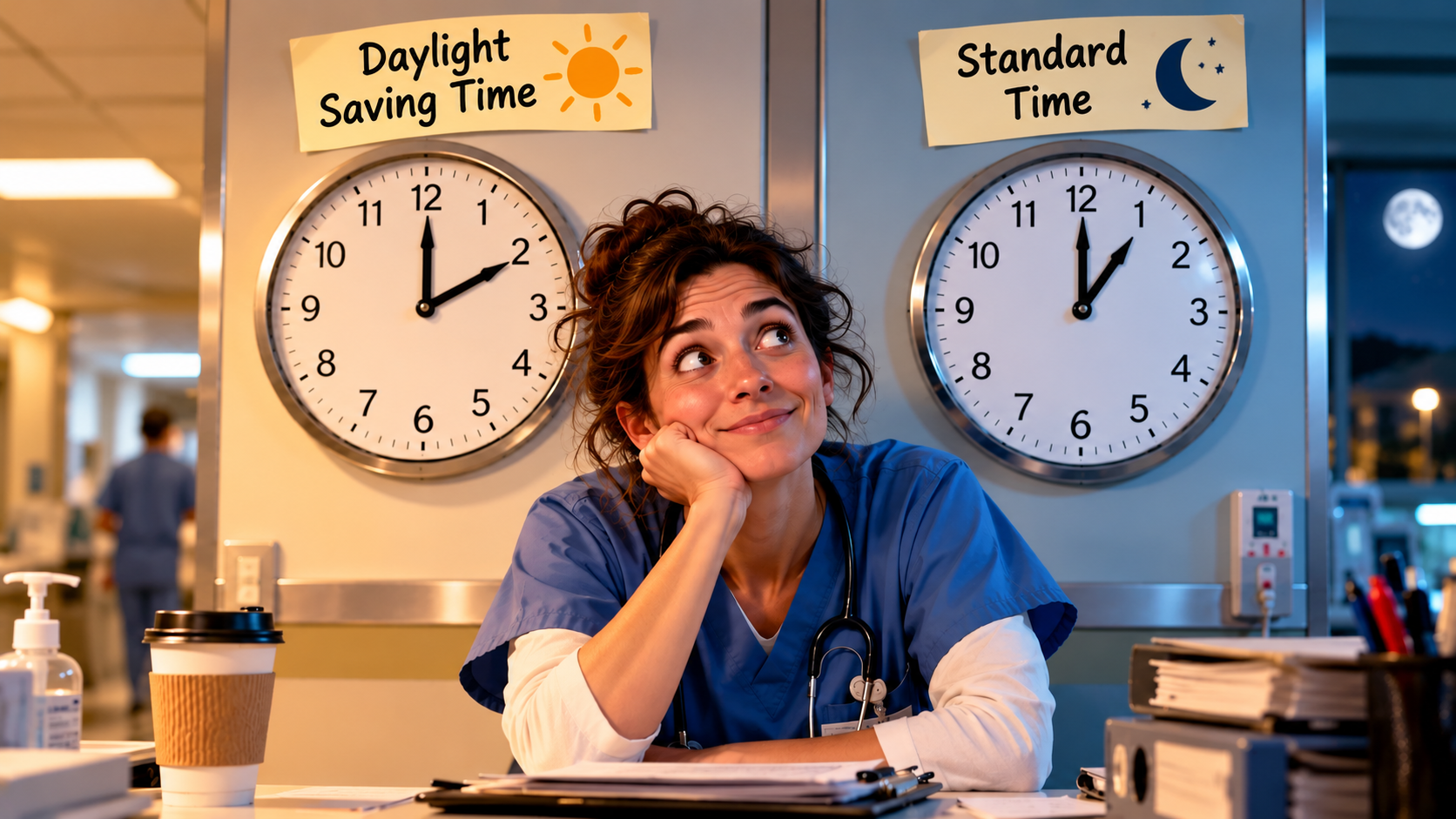
For some, early darkness is more than just a nuisance.
Changing time can be particularly challenging when sleep is already fragile, or when a person relies heavily on daily habits and cues. This is the case, for example, for some people living with dementia.
With the English term Sundowning It describes a set of symptoms that may appear or intensify in the late afternoon and evening: increased confusion, agitation, anxiety, disorientation, or difficulty sleeping. It is not a distinct disease and does not affect all people with dementia. The causes are not fully understood; fatigue, shadows, insufficient lighting, and changes in sleep-wake rhythm may contribute.
Be careful, though: this does not mean that switching to solar time automatically causes the Sundowning. The early arrival of darkness and a changed routine can make an already delicate situation more challenging.
For those who care, even a small change can have an impact: a more restless evening, a disrupted night, the need for additional reassurance. These are details that are rarely seen from the outside, but which matter enormously in everyday life.
How to help your body find its rhythm again
- Seek out natural light in the morning: a walk or some time outdoors helps give you a sense of direction for the day.
- Maintain fairly regular wake-up, meal, and bedtime times, without expecting everything to be perfect right away.
- Toward evening, reduce excessive noise and stimuli; if you care for someone with dementia, avoid suddenly making the room dark and full of shadows.
- If you notice evening restlessness, note when it occurs and what happened before: sleep, activity, meals, noises, changes in environment.
- If confusion appears suddenly or worsens rapidly, don't blame it on the time change: contact your doctor for an evaluation.
The hands of the clock change in an instant. We don't.
We can adjust the phone, the oven, and the car clock. Our body, Instead, he needs to gradually find his points of reference again. Perhaps this is the most curious aspect of the time change: we are very good at measuring time, much less at controlling it.
If you care for someone with dementia, on the blog you can also find further information on Sundowning and on behavioral changes: understanding when and how they manifest can be a first step to addressing them with greater awareness.